

The best Korean sunscreen is not defined by one finish or one trending ingredient. It must provide suitable UV protection, fit your skin and daily conditions, and feel comfortable enough to apply generously and reapply. In Egypt, heat, commuting, makeup, outdoor time, and perspiration all affect that choice.
This guide shows you how to read the label, choose for oily or sensitive skin, avoid white cast and pilling, and decide when a lightweight daily sunscreen is enough and when you need a water-resistant option.
The quick answer
Look first for broad-spectrum UVA and UVB protection, SPF 30 or higher, and water resistance when swimming or sweating. Then choose the finish your skin can use consistently. Apply sunscreen as the final skincare step before makeup, cover every exposed area generously, and reapply at least every two hours outdoors or more often after swimming, sweating, or towel drying according to the label.
- Oily or acne-prone skin: look for a comfortable lightweight finish and a non-comedogenic claim on the specific label.
- Sensitive or stinging skin: choose a formula labeled for sensitive skin and patch test it; mineral-only options may feel more comfortable for some people.
- Under makeup: use a thin-layering routine, let sunscreen settle, and do not mix it into foundation.
- Beach, sport, or heavy perspiration: choose a sunscreen whose packaging clearly states water resistance.
Why Korean sunscreens are popular
Many Korean sunscreens are designed with daily cosmetic wear in mind. Shoppers often seek fluid or lotion-like textures, a transparent finish, hydration, and formulas that sit comfortably under makeup. Those qualities can make consistent use easier, but texture does not replace protection or correct application.
A product can feel elegant and still be the wrong choice for swimming if it is not labeled water resistant. Another can be highly protective on paper but fail in practice if you apply too little because the finish feels heavy. Start with the protection label, then use texture and skin type to narrow the choice.
How to read a Korean sunscreen label
| Label detail | What it tells you | What it does not tell you |
|---|---|---|
| SPF 30, 50, or 50+ | The labeled level of protection against UVB, the rays strongly linked with sunburn | How long you can stay outdoors without reapplying |
| PA rating | A UVA protection rating used on many Asian sunscreen labels | Whether the product is water resistant |
| Broad spectrum or UVA/UVB | Coverage against both major types of ultraviolet radiation | Whether the finish will suit oily, dry, or sensitive skin |
| Water resistant | That the product passed a defined water-resistance test for the time stated on its label | Waterproof or all-day protection |
| Non-comedogenic | That the formula is designed not to clog pores | A guarantee that no individual will break out |
The American Academy of Dermatology recommends SPF 30 or higher, broad-spectrum protection, and water resistance for outdoor use. No sunscreen blocks every UV ray, so shade, protective clothing, sunglasses, and a wide-brimmed hat remain part of the plan.
How to choose by skin type and situation
| Your priority | Look for | Check before buying |
|---|---|---|
| Oily skin | Lightweight or non-greasy finish; non-comedogenic wording when acne-prone | Whether the finish stays comfortable after your moisturizer |
| Dry skin | Hydrating lotion or cream with humectants and a comfortable finish | Whether you still need moisturizer underneath |
| Sensitive skin | Sensitive-skin labeling, minimal fragrance, and a patch test | Whether it stings, burns, or leaves persistent redness |
| Dark spots | Consistent broad-spectrum protection; consider a suitable tinted option | Whether the tint matches and whether iron oxides are actually listed |
| Under makeup | Transparent, non-greasy finish that layers without rolling | Compatibility with your moisturizer and foundation |
| Beach or sport | A clear water-resistance claim and duration on the label | Reapplication directions after swimming, sweating, and towel drying |
For oily and acne-prone skin
Do not choose solely by the word “matte.” An extremely drying finish can be uncomfortable and may encourage you to use less. The AAD advises looking for “non-comedogenic” or “won't clog pores” wording for oily and acne-prone skin. Keep the morning routine light: a gentle cleanse, a small amount of moisturizer only if needed, then sunscreen.
If a new sunscreen appears to trigger persistent clogged pores or irritation, stop it and return to the last comfortable routine. Introduce one new product at a time so you can identify the cause more reliably.
For sensitive skin
Sensitive skin is not one condition. Some people react to fragrance, some to particular filters, and others sting when the skin barrier is already irritated. The AAD suggests choosing a sunscreen labeled for sensitive skin; if sunscreen repeatedly stings or burns, a formula containing only zinc oxide and titanium dioxide may be worth discussing with a dermatologist.
Patch test first and do not apply a new sunscreen over actively irritated, peeling skin without professional advice. “Mild” and “soothing” are useful product descriptions, but your own tolerance still decides whether a formula suits you.
For deeper skin tones and white cast
White residue is often more visible on deeper skin tones. A tinted sunscreen matched to your complexion can reduce that appearance. For uneven tone, some tinted products also contain iron oxides, but the tint alone does not prove that. Read the ingredient list and confirm the protection label.
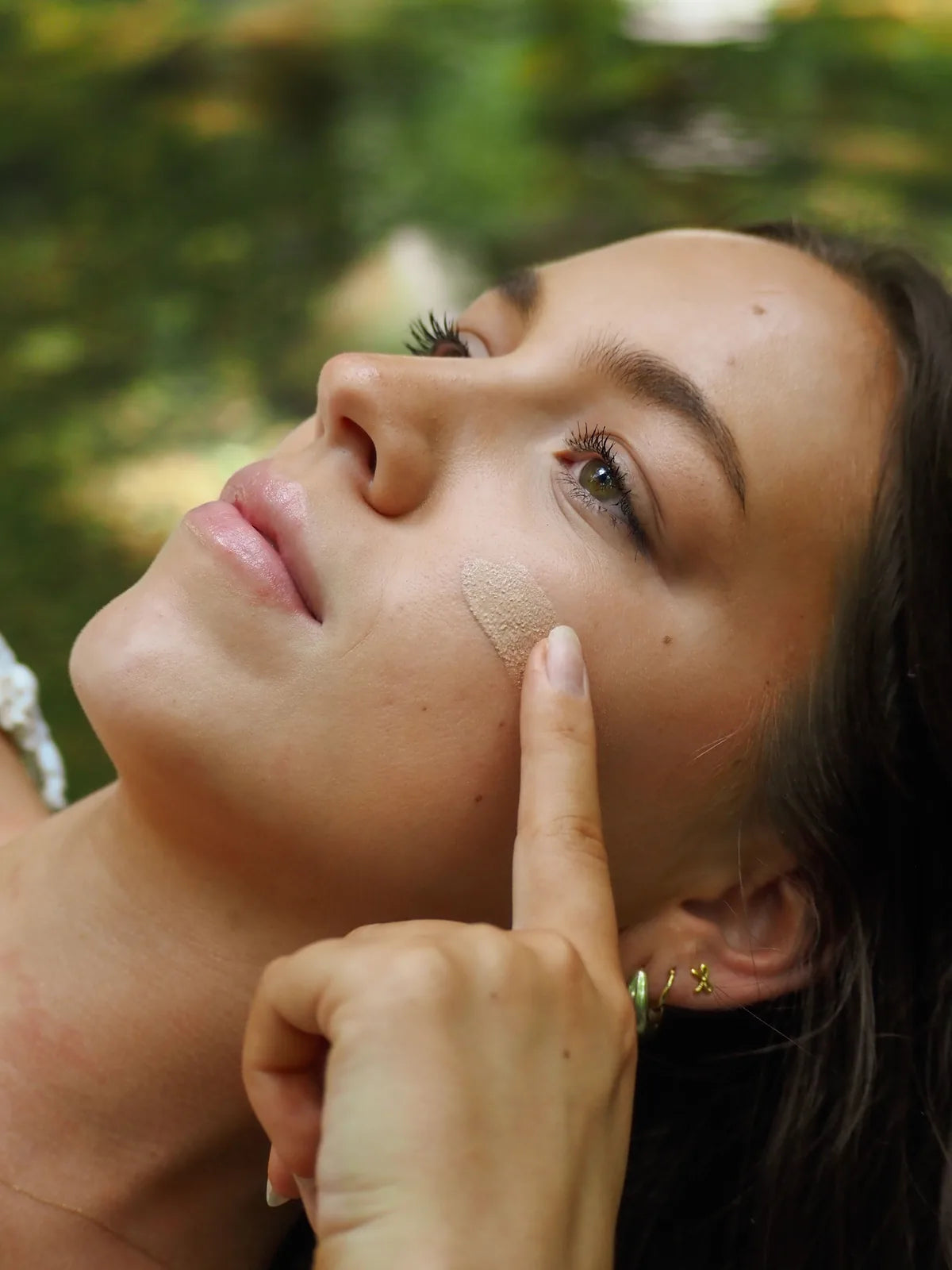
Jamila's current Korean sunscreen pick
Anua Heartleaf Silky Moisture Mild Sunscreen
Best fit: everyday city use for someone seeking a lightweight, transparent, non-greasy finish that can sit under foundation. Jamila's current product information lists SPF 50+ PA++++, chemical UV filters, heartleaf extract, panthenol, and multiple forms of hyaluronic acid.
How to use: apply a moderate amount 15 minutes before sun exposure and reapply at least every two hours, following the product directions.
Important limit: the current Jamila product information does not state that this sunscreen is water resistant. For swimming, sport, or heavy perspiration, choose a sunscreen whose own label explicitly gives a water-resistance duration.
Where sunscreen belongs in your morning routine
| Order | Step | Application note |
|---|---|---|
| 1 | Gentle cleanse or water rinse | Start with comfortable, clean skin |
| 2 | Optional serum | Use only if it layers well and is already tolerated |
| 3 | Moisturizer if needed | Keep the layer light enough to avoid excess slip |
| 4 | Sunscreen | Final skincare step; cover face, ears, neck, and other exposed skin |
| 5 | Makeup | Apply after the sunscreen has settled |
Do not mix sunscreen into moisturizer or foundation. Mixing makes the applied film uneven and makes it difficult to know whether you used enough. If products pill, reduce unnecessary layers, allow each one to settle, and test a pressing motion instead of vigorous rubbing.
How much sunscreen should you apply?
Use enough to cover every exposed area generously and evenly. The FDA states that an average adult needs about one ounce to cover the exposed body from head to toe. A single face measurement is less universal because face size, product density, applicator, and the areas included vary.
Do not forget the ears, hairline, sides of the face, neck, hands, and exposed scalp. Apply 15 minutes before sun exposure when the label instructs it. Avoid the eyes and mouth, and use an SPF lip product for the lips.
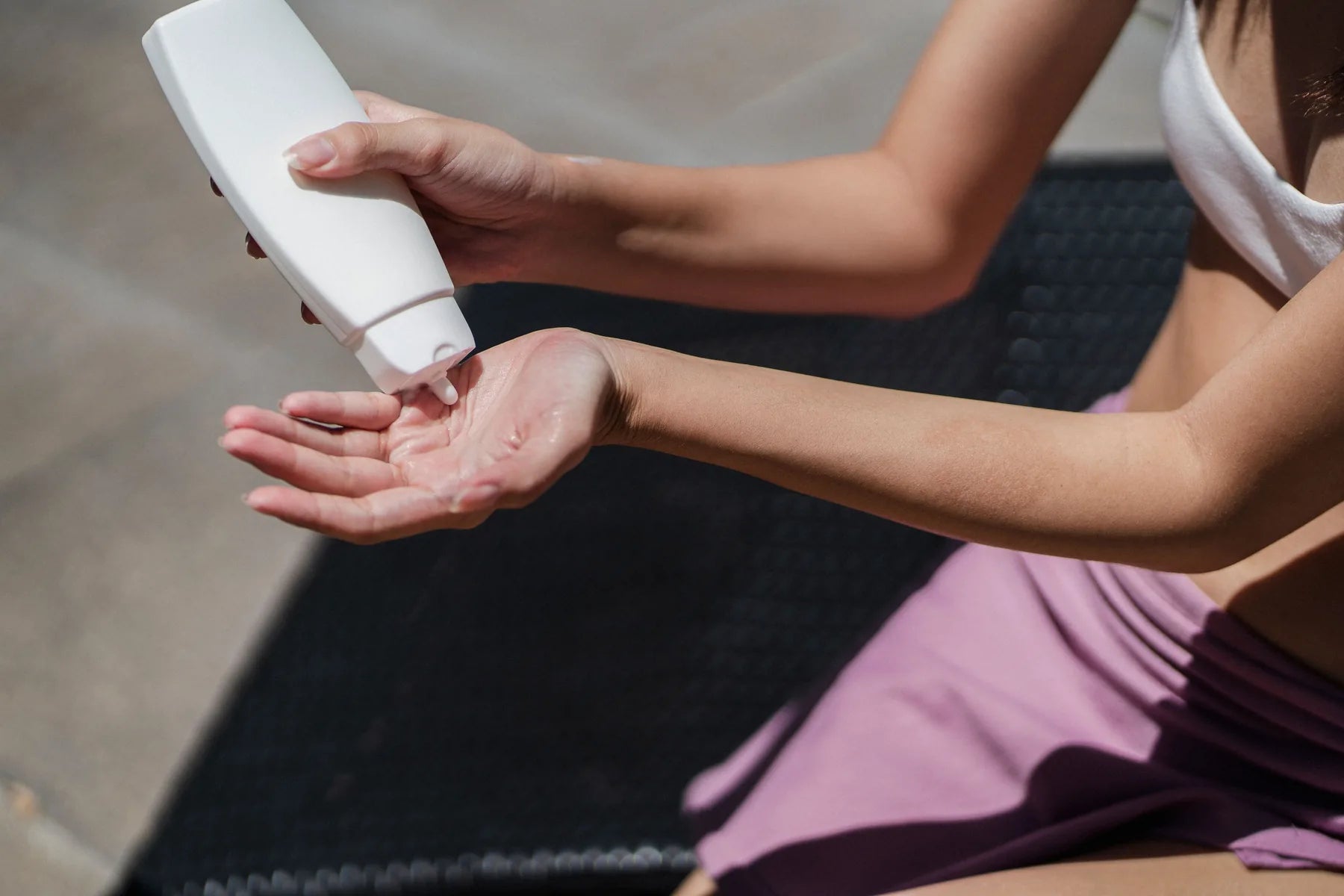
How to reapply sunscreen over makeup
Reapply at least every two hours when outdoors and more often after swimming, sweating, or towel drying according to the label. Makeup does not extend sunscreen protection. If possible, use clean hands and gently press a suitable sunscreen over makeup in thin, even passes.
Sticks, cushions, sprays, and powders can feel convenient, but their format does not guarantee that enough product reaches every area. Use the amount and technique stated on the label. Never spray sunscreen directly onto the face; the FDA advises spraying into the hands first and then applying.
For a long outdoor day, plan around protection rather than perfect makeup. Carry the sunscreen, choose lighter makeup, use shade and a hat, and schedule reapplication before leaving home.
Everyday city sunscreen vs beach sunscreen
A transparent daily formula can work well for indoor-outdoor commuting and makeup wear when applied and reapplied correctly. A beach, pool, sports, or very sweaty day changes the requirement. Choose a broad-spectrum, water-resistant product and check whether its label specifies 40 or 80 minutes of water resistance.
“Water resistant” never means waterproof. Reapply after the stated period in water, immediately after towel drying, and at least every two hours. Sunscreen is only one layer of protection; seek shade and wear protective clothing when exposure is prolonged.
Common sunscreen mistakes
- Applying too little: a beautiful finish cannot compensate for patchy coverage.
- Using SPF as a timer: SPF 50 does not mean fifty hours without reapplication.
- Skipping cloudy days: ultraviolet exposure still occurs when the sky is overcast.
- Forgetting ears and neck: protection stops where application stops.
- Mixing sunscreen with makeup: this makes the protective layer difficult to control.
- Assuming every Korean sunscreen is water resistant: check the exact product label.
- Relying on makeup SPF alone: most people do not apply foundation in the amount used for sunscreen testing.
- Ignoring irritation: persistent burning, rash, swelling, or eye irritation is a reason to stop and seek advice.
Build a sunscreen-first routine with Jamila
For a lightweight Korean daily option, review the Anua sunscreen and decide whether its finish and current directions match your normal day. Browse the Sunscreen collection for the latest availability or explore all skincare at Jamila.
If shine, pores, and blackheads shape the rest of your routine, read our Korean skincare routine for oily skin. If you use vitamin A at night, continue with Retinol vs Retinal. For uneven tone, see how to fade dark spots and post-acne marks safely.
Sources and image credits
- American Academy of Dermatology: Choosing the right sunscreen
- American Academy of Dermatology: Understanding sunscreen labels
- U.S. Food and Drug Administration: Sunscreen use
- Pexels License; photographs by Mikhail Nilov, Christine Bunn, and Armin Rimoldi.
Last reviewed: September 2026. This article is educational and does not replace medical advice.


