

Retinol and retinal belong to the same vitamin A family, but they are not identical. Both can support smoother-looking texture, more even-looking tone, and the appearance of fine lines when used consistently. The right choice is the one your skin can tolerate and you can use correctly—not simply the ingredient with the stronger reputation.
This guide explains the difference between retinol and retinal, where each sits in the vitamin A pathway, how to choose between two available Jamila formulas, and how to build a careful night routine around your choice.
The quick answer
Retinol needs two conversion steps in the skin before it becomes retinoic acid. Retinal, also called retinaldehyde, needs one. That difference may make retinal an appealing targeted option, but it does not guarantee that every retinal product will work faster or suit every person better. Concentration, formula, application, frequency, and tolerance all matter.
- New to vitamin A: choose one clearly directed formula and begin at the lowest recommended frequency.
- Already comfortable with retinoids: a retinal-led product may be a logical next route if its formula and directions suit you.
- Sensitive, peeling, or irritated skin: repair the basic routine first instead of adding a retinoid immediately.
Retinoid, retinol, retinal, and tretinoin: what do the names mean?
Retinoid is the umbrella term for vitamin A derivatives used in skincare and medicine. Retinol and retinal are cosmetic retinoids. Tretinoin is retinoic acid and is a prescription medicine in many markets. They should not be treated as interchangeable products with interchangeable instructions.
A simplified conversion pathway looks like this:
Retinyl esters → Retinol → Retinal (retinaldehyde) → Retinoic acid
Retinol sits two steps away from retinoic acid, while retinal sits one step away. This biochemical pathway explains why shoppers often describe retinal as the more direct cosmetic route. It does not tell you how a complete product will behave on your skin. Delivery system, stability, percentage, supporting ingredients, packaging, and how often you apply it can change the experience.
Research on over-the-counter retinol also varies by formula and study design. A systematic review found that evidence across cosmetic retinol trials was mixed rather than uniform. That is a useful reminder to judge the complete product and your own response instead of choosing by ingredient name alone.
Retinol vs retinal comparison
| Question | Retinol | Retinal |
|---|---|---|
| Where is it in the pathway? | Two conversions before retinoic acid | One conversion before retinoic acid |
| Who may consider it? | Beginners who want a clearly directed introduction or experienced users who already like their retinol formula | Users seeking a more targeted cosmetic vitamin A route and ready to introduce it cautiously |
| When is it used? | Usually in the evening, according to the product label | Usually in the evening, according to the product label |
| What can go wrong? | Dryness, stinging, redness, or peeling when started too quickly | The same irritation risks, especially when over-applied or combined with too many actives |
| What is essential? | Moisturizer, gradual introduction, and morning sunscreen | Moisturizer, gradual introduction, and morning sunscreen |
Which should you choose?
Start with your current skin condition and routine experience. If your face is already tight, burning, visibly peeling, or reacting to plain moisturizer, neither option should be your next step. Return to a gentle cleanser, moisturizer, and sunscreen until the skin feels settled.
Choose a retinol-led route if you want a guided introduction
SOME BY MI Retinol Intense Reactivating Serum
Best fit: a shopper who wants a serum with explicit adaptation directions. The current product information lists retinol, retinal, and bakuchiol in the formula, so it is not a retinol-only comparison sample. Its label instructs users to apply a small amount during the first two weeks and then increase amount and frequency only after the skin adapts.
Why choose it: the built-in introduction guidance makes it easier to avoid an aggressive start. Follow the product directions rather than creating a faster schedule.
Choose a retinal-led route if you want a targeted evening booster
Celimax The Vita-A Retinal Shot Tightening Booster 15ml
Best fit: someone already comfortable with a simple skincare routine who wants retinal as the named lead vitamin A ingredient. Jamila's current product information lists 0.1% retinal, panthenol, peptides, and the brand's A-Shot microparticle system.
What to know: the product is designed for evening use and may create a tingling sensation. Tingling is not a target to chase. Use a small amount as directed, and stop if discomfort is persistent or intense.
Choose one vitamin A product. Do not use the SOME BY MI serum and Celimax booster in the same routine while you are learning what your skin tolerates.
How to start without overwhelming your skin
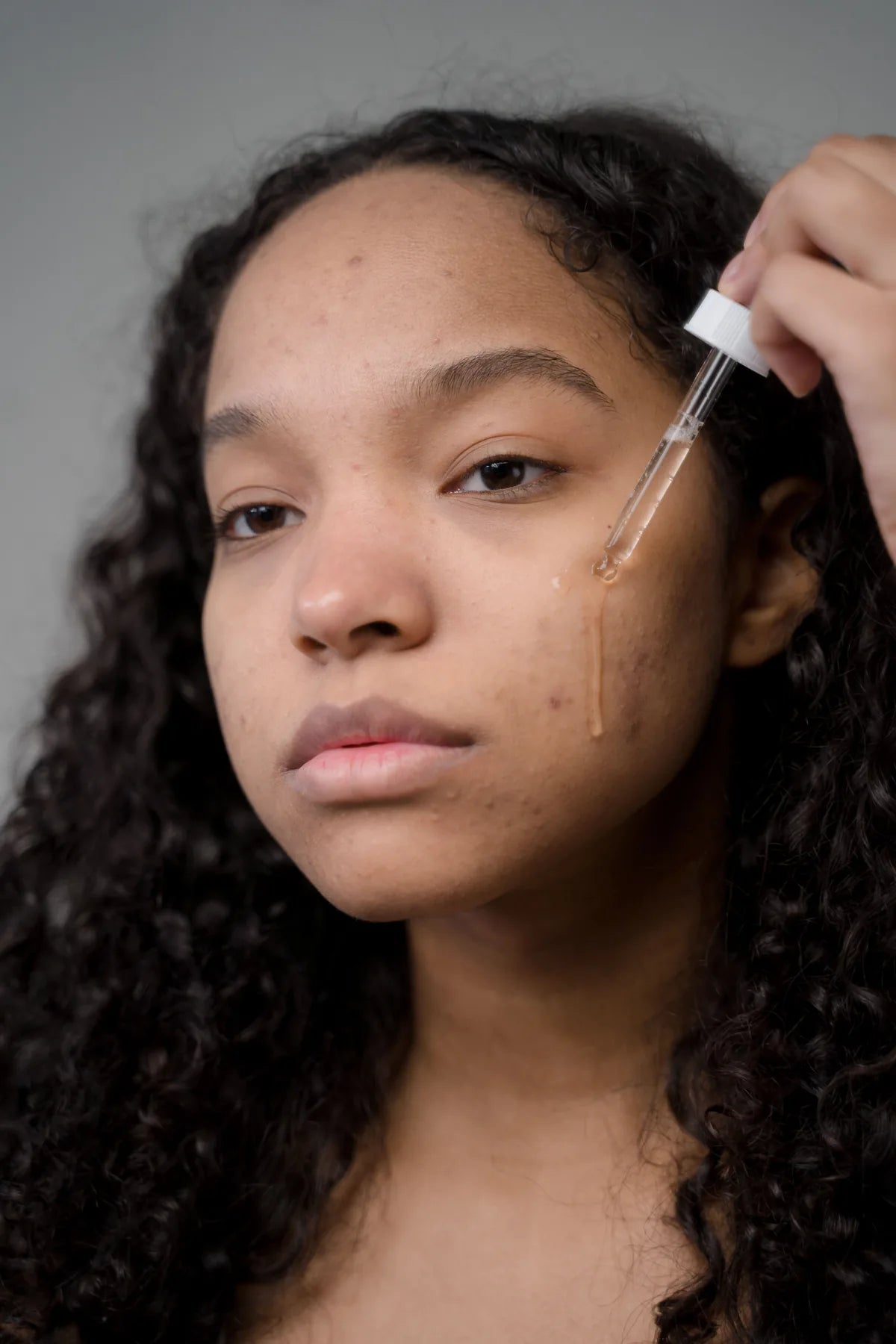
The American Academy of Dermatology advises starting with the least-intense formula you can find and using it every other night at first, then building gradually. Your product label may be more specific and takes priority. If you have a history of eczema, rosacea, persistent sensitivity, or reactions to active ingredients, ask a dermatologist before starting.
- Patch test first. Apply the product to a small area as directed and watch for an unwanted reaction before using it across the face.
- Use it at night. Cleanse gently, allow the skin to dry, and apply only the amount stated on the label.
- Start slowly. Do not jump to nightly use because you want faster results. More irritation does not mean more benefit.
- Moisturize. Apply a comfortable moisturizer after the retinoid, or use the sandwich method if your label and clinician guidance allow it.
- Protect every morning. Apply broad-spectrum sunscreen to exposed skin and reapply according to the label.
The moisturizer sandwich method
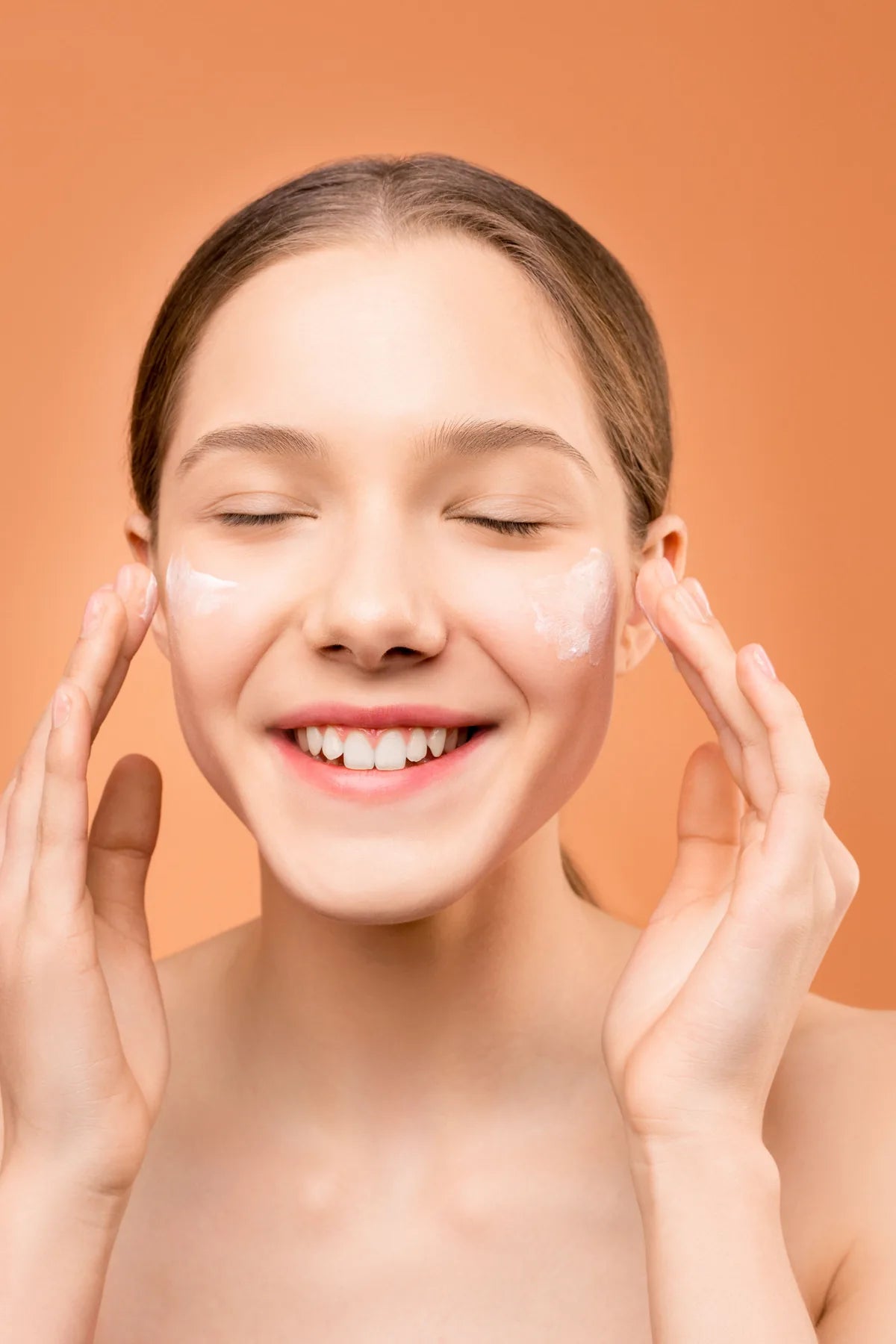
The sandwich method places a thin layer of moisturizer before the retinoid and another layer afterward. It can make the routine feel more comfortable for some beginners, although it is not a reason to ignore the product directions. Let each layer settle, keep the retinoid amount small, and avoid applying it onto wet skin unless the label specifically says otherwise.
Dr. Althea 345 Relief Cream
Best fit: a lightweight moisturizer step for someone who wants a simple finish after the chosen retinoid. Jamila's product information describes this cream as non-comedogenic tested and lists ceramide NP and niacinamide. Apply an adequate amount as the final skincare step according to its directions.
A cautious four-week introduction schedule
This example is a conservative framework, not a prescription. If your product label recommends a lower frequency, follow the label.
| Week | Retinoid nights | What to assess |
|---|---|---|
| 1 | Patch test, then one night if comfortable | Persistent burning, swelling, itching, or rash |
| 2 | One to two separated nights | Dryness, tightness, visible peeling, and moisturizer comfort |
| 3 | Keep the same frequency if the skin is comfortable | Do not increase just because no result is visible yet |
| 4 | Increase only if the label allows and the skin remains settled | Consistency and comfort before intensity |
On non-retinoid nights, keep the routine plain: gentle cleanser and moisturizer. If irritation appears, pause the retinoid and other strong actives. Restart only when the skin has recovered and at a lower frequency allowed by the label. Seek medical advice for severe or persistent reactions.
What should you avoid on the same night?
When first introducing retinol or retinal, avoid turning the same evening into an active-ingredient experiment. Strong exfoliating acids, abrasive scrubs, another retinoid, or several newly introduced treatment serums can make irritation more likely and make the cause difficult to identify.
This does not mean every ingredient combination is forbidden forever. It means your first goal is to establish tolerance. Once the routine is stable, a dermatologist can help arrange stronger or prescription treatments around your needs. If you use benzoyl peroxide, prescription acne medicine, or a prescribed retinoid, ask the prescriber how to schedule every product rather than adding an over-the-counter retinoid independently.
Your complete routine at a glance
| Order | Morning | Retinoid evening |
|---|---|---|
| 1 | Gentle cleanse or water rinse | Remove makeup and sunscreen, then cleanse gently |
| 2 | Moisturizer if needed | Optional thin moisturizer layer for the sandwich method |
| 3 | Broad-spectrum sunscreen | One chosen retinol or retinal product |
| 4 | Reapply sunscreen as directed | Moisturizer |
Anua Heartleaf Silky Moisture Mild Sunscreen
Best fit: a lightweight morning sunscreen option. The current product directions specify SPF 50+ PA++++, application 15 minutes before sun exposure, and reapplication at least every two hours. Apply enough to exposed skin and follow the label.
When should you expect a result?
Retinoid changes are gradual and individual. Do not judge a product after a few nights or increase application because the mirror looks unchanged. Clinical studies use defined formulas, concentrations, schedules, and study periods; their results cannot be transferred as a guarantee to every cosmetic product.
Take a photo in the same lighting every four weeks and monitor comfort as carefully as appearance. A routine you can continue is more useful than an intense routine that repeatedly causes peeling and forces long breaks.
Who should not start without medical guidance?
The American Academy of Dermatology advises avoiding prescription and over-the-counter retinoids during pregnancy. If you are pregnant or trying to conceive, do not start retinol or retinal. If you are breastfeeding, using prescription skincare, preparing for a procedure, or managing a diagnosed skin condition, ask a qualified clinician what is appropriate for you.
See a dermatologist if you have severe acne, scarring, unexplained pigment changes, persistent inflammation, or a reaction that does not settle after stopping the product. Cosmetic retinoids are not substitutes for diagnosis or prescription treatment.
Common retinol and retinal mistakes
- Choosing by the ingredient name alone: formulation, percentage, stability, and directions all matter.
- Starting every night: a faster schedule can create irritation before tolerance develops.
- Using two vitamin A products together: this raises complexity and may increase irritation.
- Applying extra product: more does not create proportionally faster results.
- Adding acids and scrubs immediately: introduce one active change at a time.
- Skipping moisturizer: comfort supports consistency.
- Skipping sunscreen: morning sun protection remains essential.
- Treating tingling as proof: discomfort is not a score for effectiveness.
Choose your vitamin A route with Jamila
If you want the product with explicit beginner adaptation instructions, compare the SOME BY MI serum. If you already have a stable routine and want retinal as the lead vitamin A ingredient, review the Celimax booster and follow its evening directions carefully. Browse more options for the appearance of fine lines in the Fine Lines collection, explore all skincare, and complete the morning step in the Sunscreen collection.
For a broader introduction before choosing a product, read our retinol beginner night-routine guide. If uneven tone is your main concern, continue with how to fade dark spots and post-acne marks safely.
Sources and image credits
- American Academy of Dermatology: Retinoid or retinol?
- American Academy of Dermatology: Pregnancy skin care
- Systematic review of topical retinol clinical evidence
- Review of retinoids in cosmetic dermatology
- U.S. Food and Drug Administration: Sunscreen use
- Pexels License; photographs by Miriam Alonso, Ron Lach, and Shiny Diamond.
Last reviewed: September 2026. This article is educational and does not replace medical advice.


